Commercial Sewage Cleanup in Greentown, IN
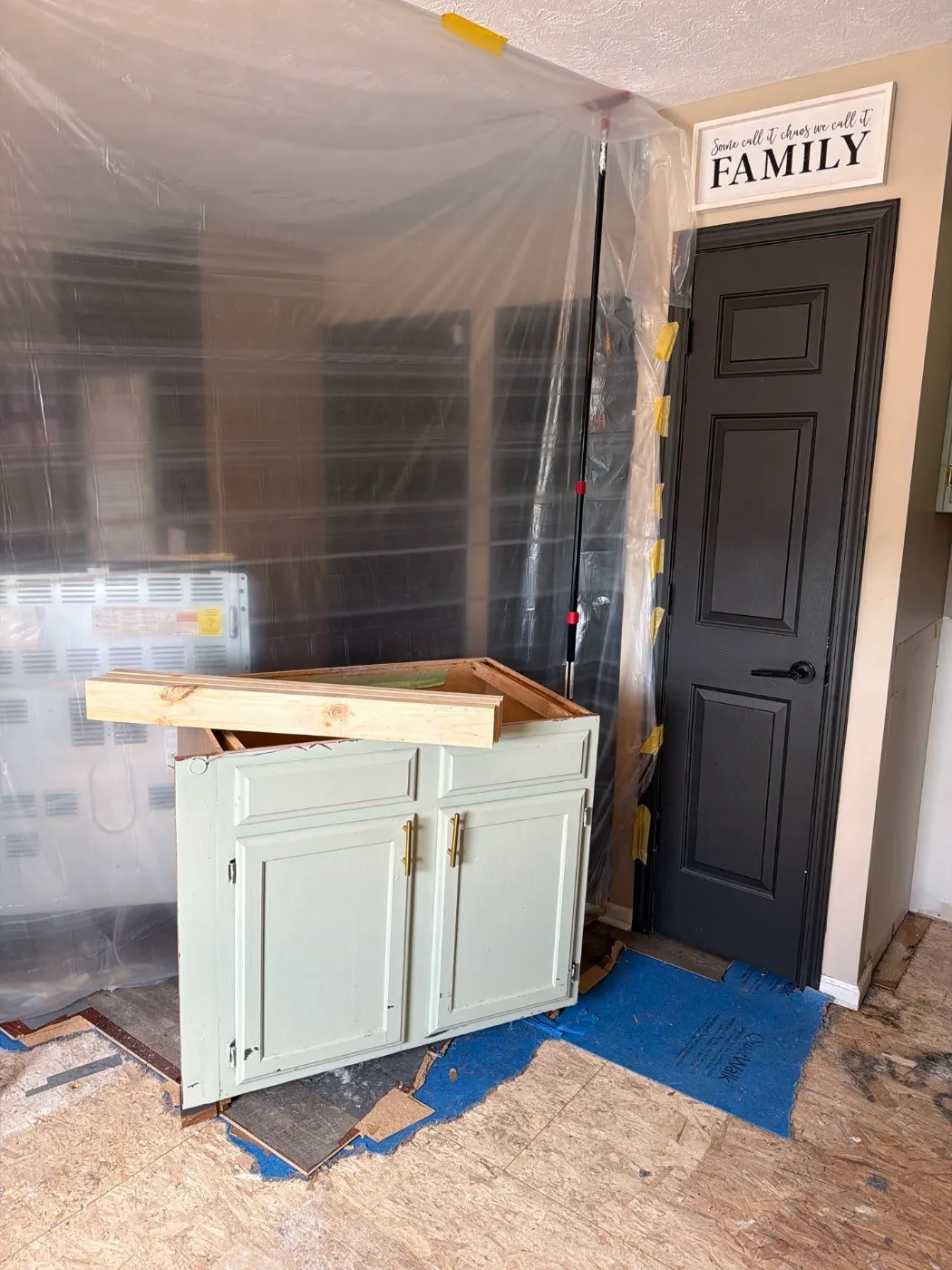
Commercial sewage cleanup for Greentown properties, with the work kept inside containment so more of the building can stay in use.
Need Commercial Sewage Cleanup in Greentown? Greentown Water Restoration answers 24/7 with certified crews, fast on-site response, and documentation built for your insurance claim. Call (463) 241-6041 now.
- Service: Commercial Sewage Cleanup for Greentown homeowners
- Service area: Greentown, IN and surrounding areas
- Response time: Emergency calls from Greentown dispatched immediately, day or night
- Licensed and insured (License #RC21100059)
- Serving Greentown, IN since 2018
Commercial Sewage Backup Cleanup in Greentown
We handle commercial sewage backup cleanup throughout Greentown, and the work zone stays closed off while it's underway.
Sewer System Notes
Heavy rain can overload the sewer lines serving Greentown and push sewage into lower levels. Older sewer lines in parts of Greentown raise the backup risk for buildings tied into them. On the first walkthrough, we'll check where your building ties into the public sewer and whether it has a backflow valve.
We handle commercial sewage jobs anywhere in Greentown, including the area near the Historic Downtown Walking Trail. We also handle commercial sewage backups in Jerome, Kokomo, Sycamore and Converse.
Commercial Sewage Cleanup for Greentown Businesses
Sewage backing up through a restroom block puts two problems in front of you at the same time. The contamination has to come out, and the people who work in that building have to stay clear of it while the work runs. Greentown Water Restoration dispatches a crew to commercial sewage losses in Greentown within 2 hours, with extraction equipment, containment materials, and the documentation your building file and your carrier will both want.
Each drying visit logs temperature and humidity in the room and at the dehumidifier outlet, and the crew calculates dew point from those numbers. Comparing outlet air with room air shows whether the machine is pulling moisture out of the Greentown structure, and a flat comparison tells the crew to move or add equipment.
The last stage is a walkthrough with the property manager, room by room, with the final readings and photographs in hand. Items that still need repair work go onto a written punch list with the cut lines and measurements beside each one. Greentown Water Restoration schedules equipment pickup after that sign off, so the Greentown space isn't left with machines running longer than the readings call for.
Sewage losses draw more adjuster attention than clean water losses, mostly because the removal scope is larger. Greentown Water Restoration expects the questions and documents the answers before they get asked: why the material was unsalvageable, what the moisture readings showed, which antimicrobial was applied at what dilution, and how long the dwell time ran. That record answers the obvious questions before anyone has to ask them.
Tell us what you're looking at and we'll tell you what it takes. Greentown Water Restoration inspects commercial sewage losses in Greentown and Howard County, maps what is wet, and walks you through what gets cleaned and what has to come out. Crews dispatch when the situation calls for it. Call when you're ready to get it moving.
Signs You Need Commercial Sewage Cleanup
If you notice any of these in your Greentown building, schedule a free inspection before the issue worsens.
Odor that gets stronger the closer you walk to the lowest floor drain
A ceiling tile stained and sagging directly below an upper floor restroom
Corridor carpet that feels damp and smells of sewage near a restroom door
Water rising out of a floor drain when a kitchen line discharges
Water on a slab along the wall where the building's sewer line runs out to the street
Odor returning days after a plumber cleared the line and declared it flowing
Kitchen drains running slow again soon after the grease interceptor was pumped
Slick film on the floor around a drain that was dry the day before
Carpet tile edges in a corridor outside a restroom staying damp between cleanings
A cleanout cap pushed loose, or water pooling around a cleanout in a mechanical room
How Greentown Water Restoration Handles Commercial Sewage Cleanup
We follow these steps in order on every Greentown job.
Source Shutoff and Power Check
Your maintenance team and plumber take affected fixtures out of service while the crew confirms which circuits serve the wet area. Outlets and panels near standing water get isolated before any pump or extractor is plugged in.
Containment and Access Control
Crews build 6 mil poly barriers with zipper entries around the affected area, seal the HVAC openings serving it, and put the zone under negative pressure with HEPA air scrubbers. Entry is limited to crew in PPE for the rest of the job.
Surface Cleaning
Every reachable surface gets a detergent wash with agitation to pull the soil load off it, because an antimicrobial over residue doesn't reach what sits underneath. Floor sinks, trench drain channels, grout lines, and stainless bases get cleaned by hand.
Drain and Trap Cleaning
Floor sinks and trench drains get opened and scrubbed by hand so the antimicrobial that follows reaches clean surfaces. The crew photographs each drain before and after cleaning, and traps are checked for leftover debris.
Repeat Prevention Review
After the space is released, the lead reviews the plumbing path with your maintenance staff and notes cleanout access and the interceptor service schedule. Those notes, with the location of any backwater valve, go to your plumber to review for line maintenance.
Commercial Sewage Cleanup in Greentown
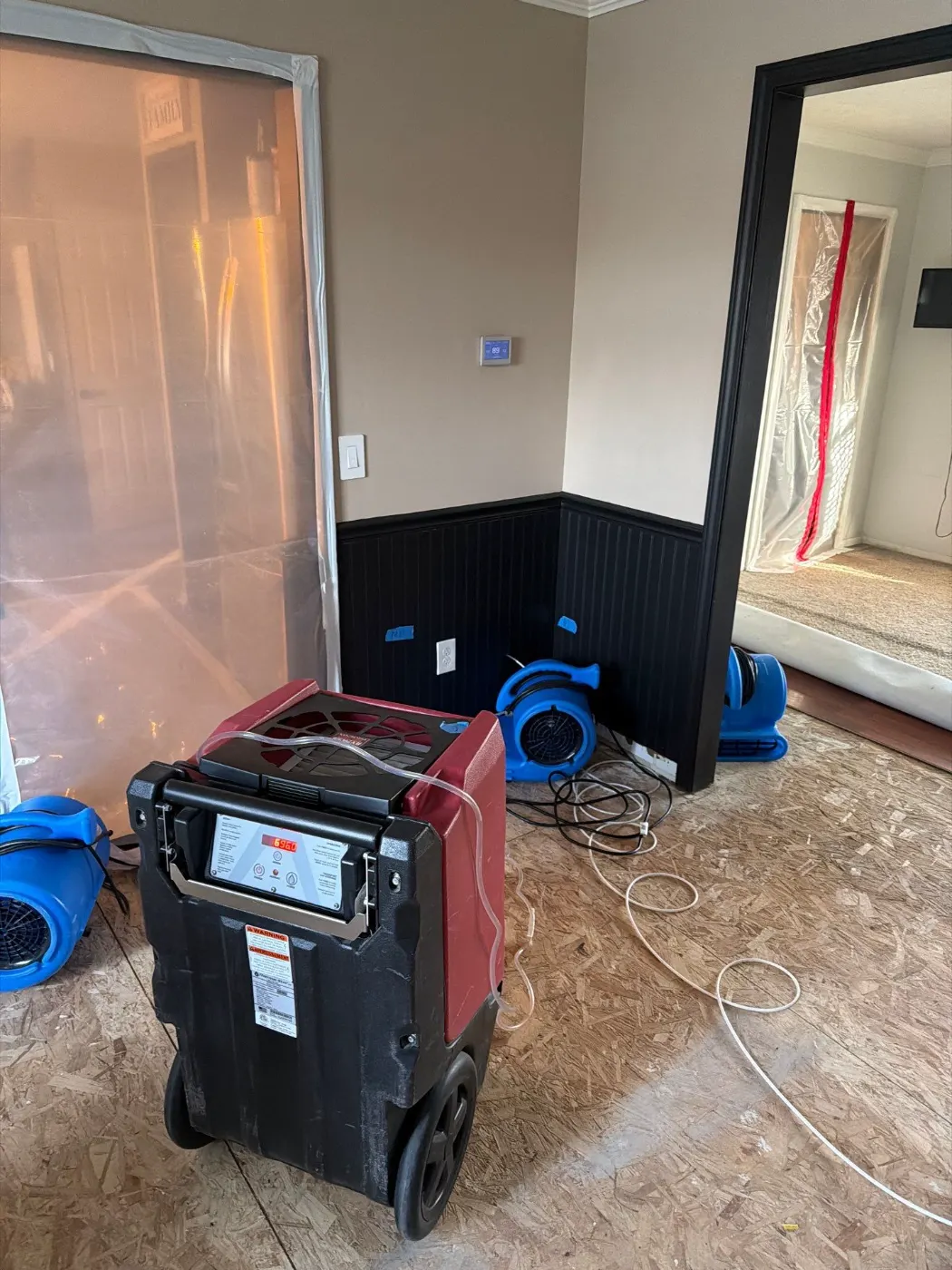
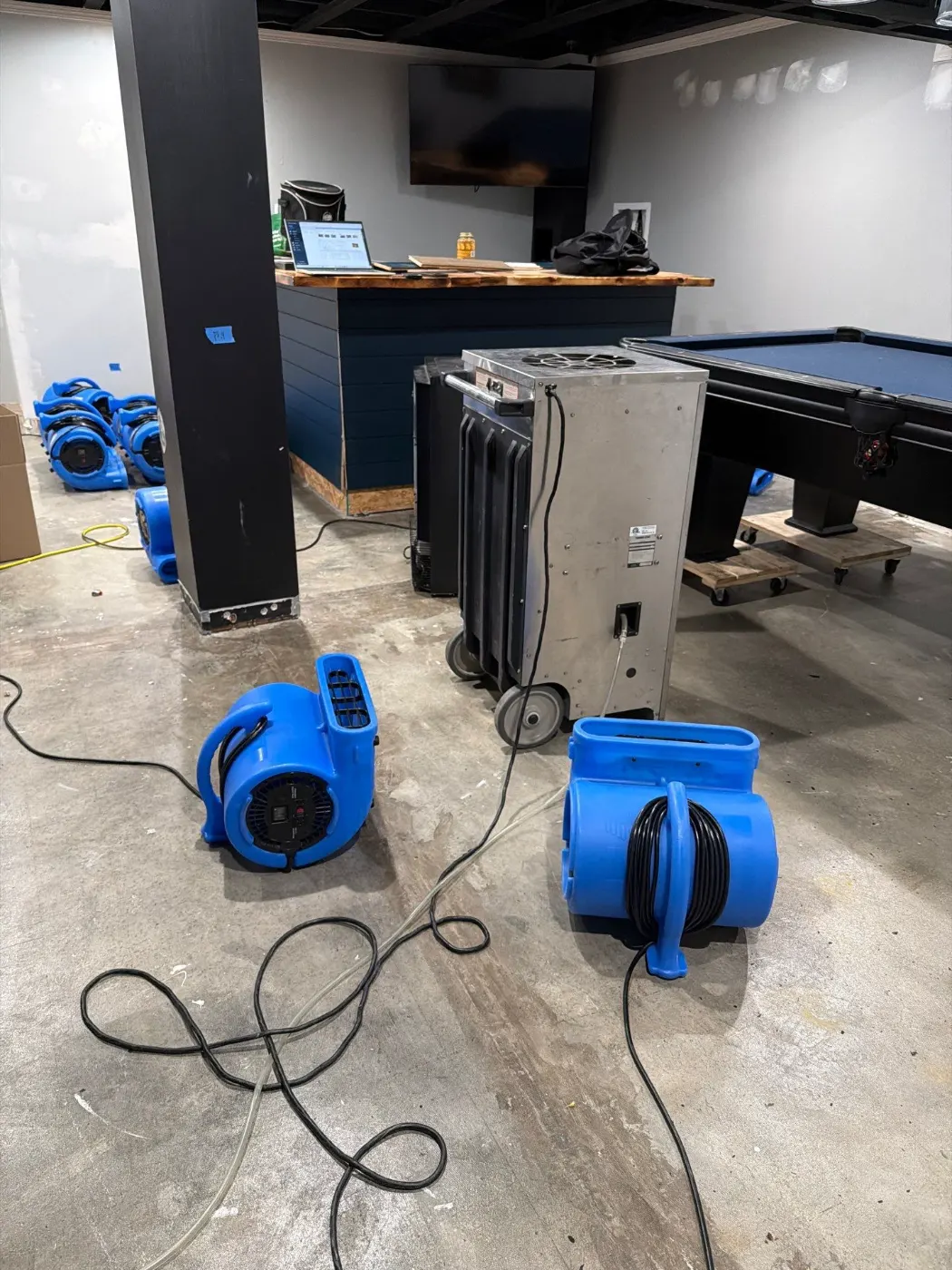
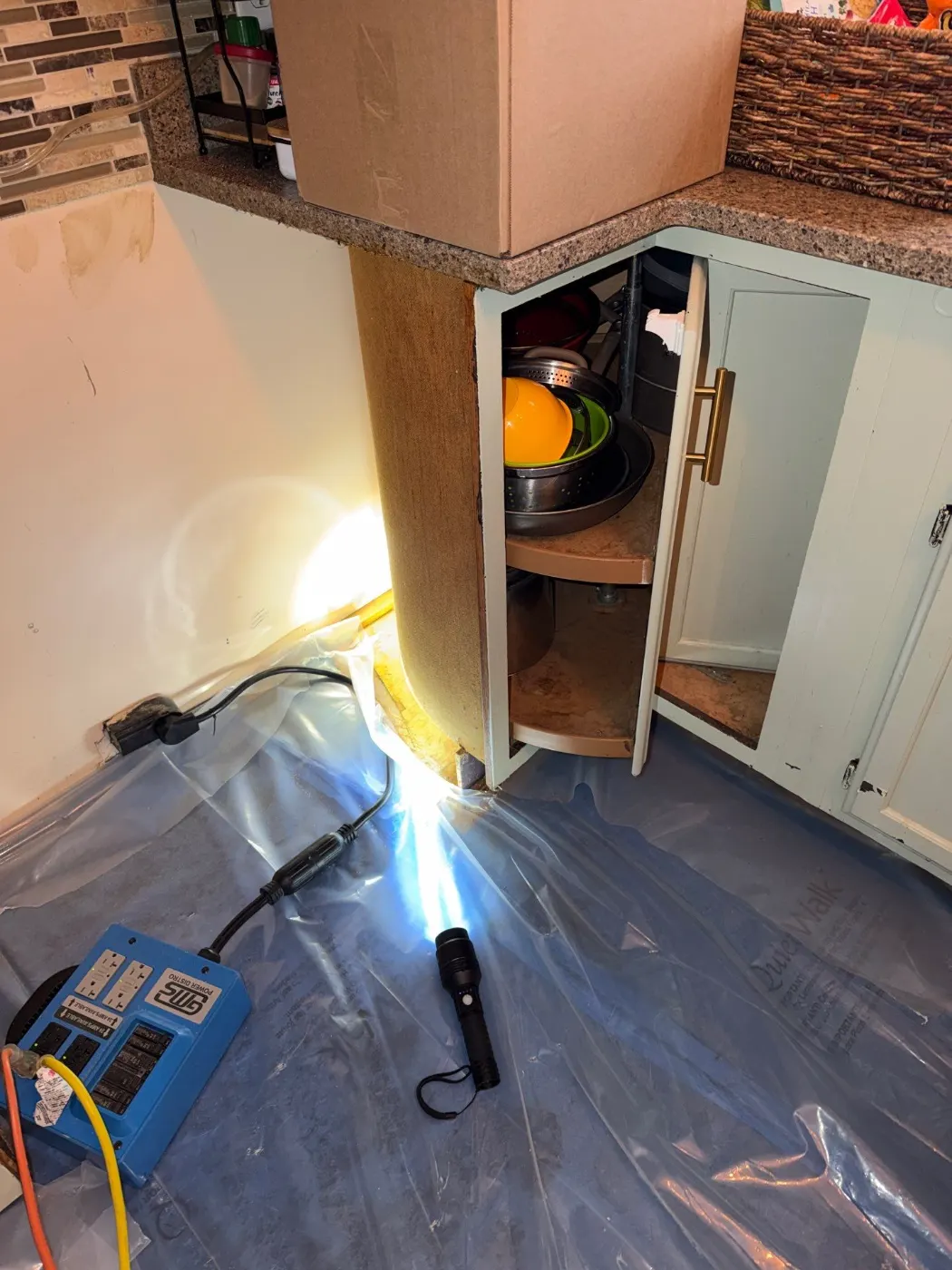
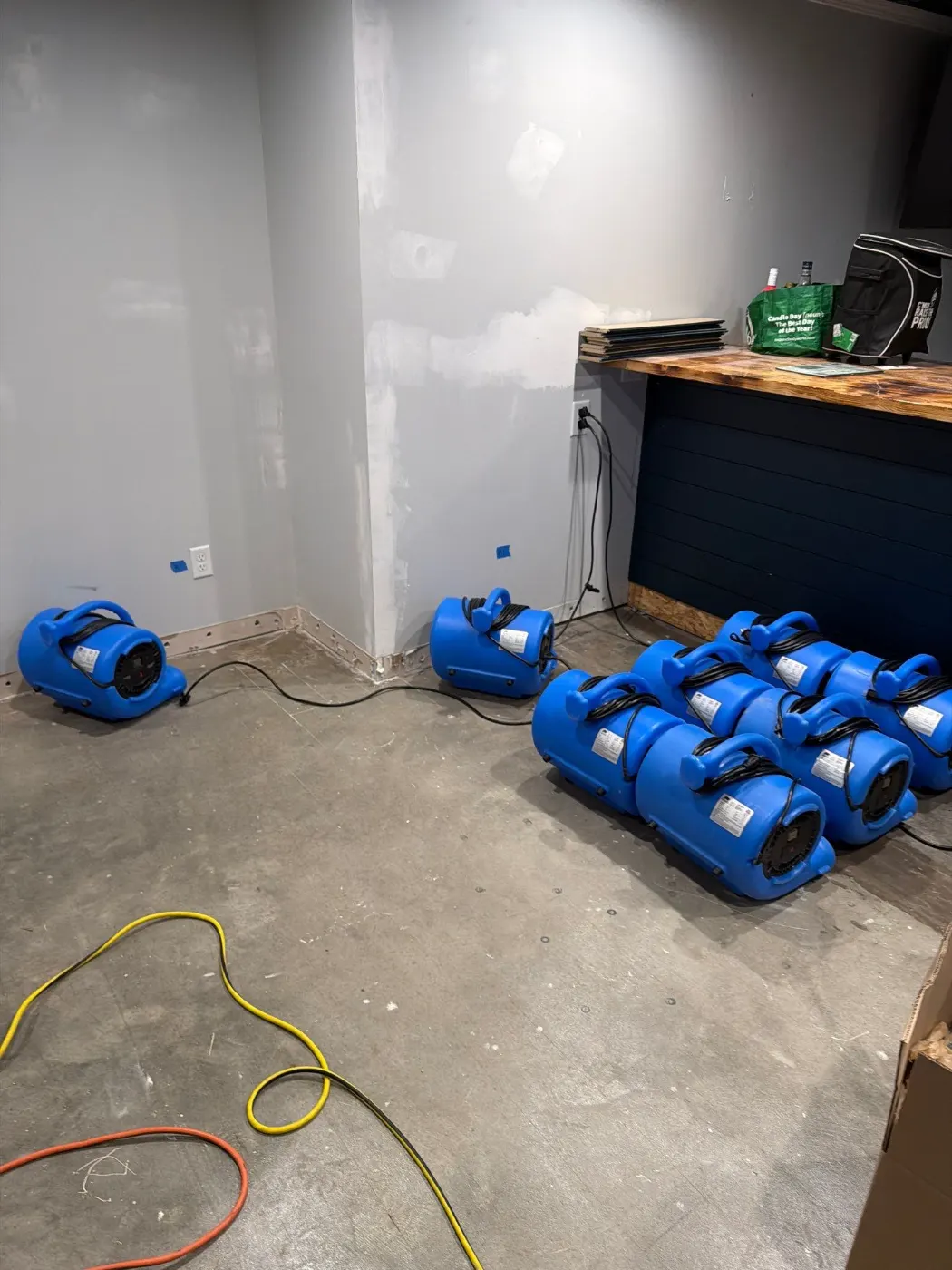
Photographs from real commercial sewage cleanup jobs completed by our crew in Greentown and surrounding areas.
Commercial Sewage Cleanup FAQ
Questions Greentown property managers ask us about commercial sewage cleanup.
Guidance and Standards for Commercial Sewage Cleanup
- The ANSI/IICRC S500 is the published standard for professional water damage restoration. The current edition is the Fifth Edition, 2021. IICRC S500 Standard
Greentown Neighborhoods We Serve
We take commercial sewage cleanup calls in every part of Greentown. Pick your neighborhood for local details.
Other Restoration Services in Greentown
Greentown Water Restoration handles the full scope of restoration work. Explore our other services below.
Water Damage Restoration in Greentown
24/7 emergency response. IICRC certified water restoration from extraction to full dry out.
Learn more →Basement Flooding in Greentown
Basement water emergencies handled fast. Extraction, drying, mold prevention.
Learn more →Sewage Cleanup in Greentown
Category 3 biohazard cleanup. Full containment, decontamination, structural restoration.
Learn more →Request Commercial Sewage Cleanup
Reach Us Directly
Our team is available 24/7 for emergencies and ready to schedule inspections during business hours.
Need Immediate Help?
For active water or mold emergencies, call us directly. We are available 24/7.